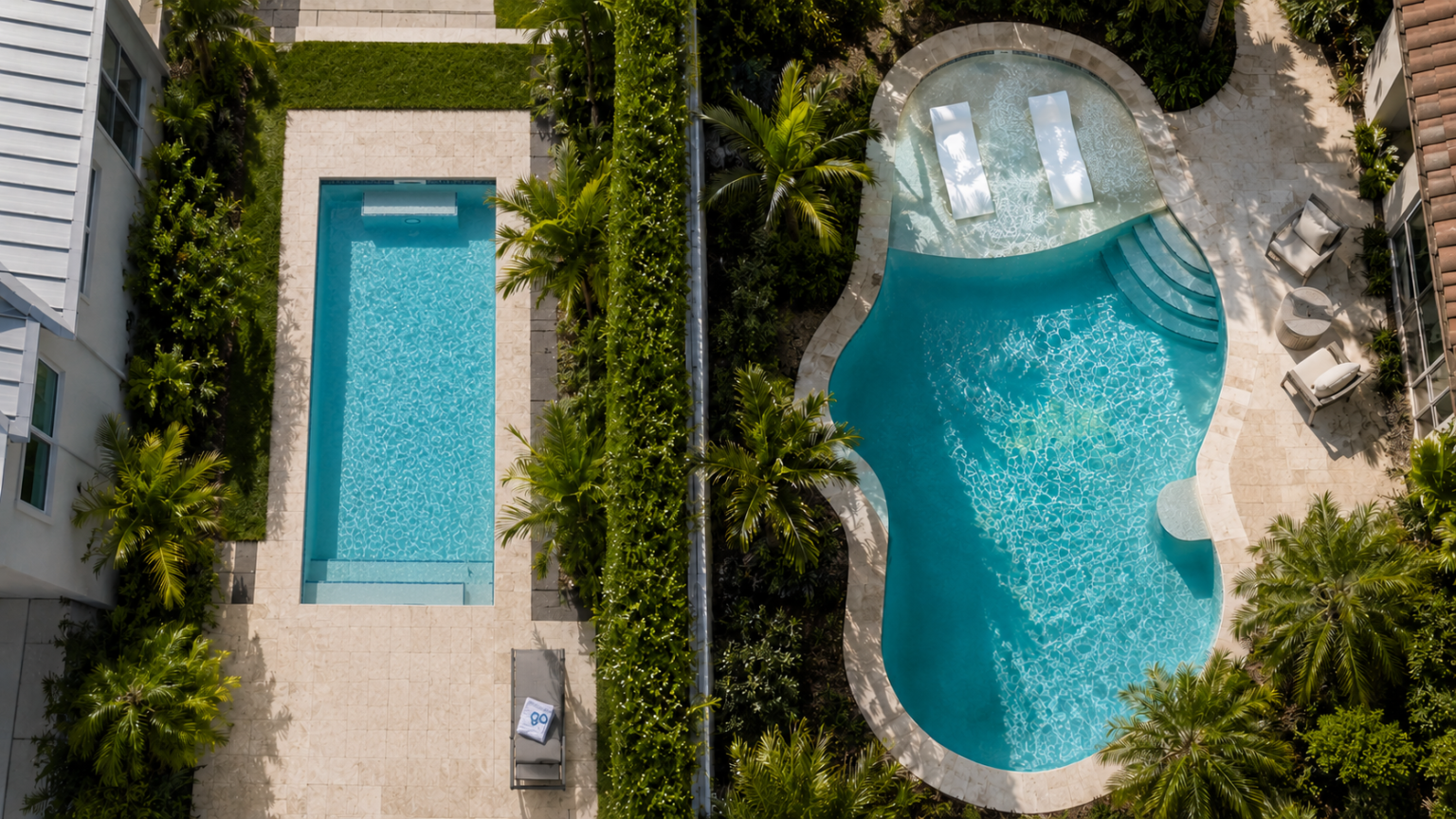
The lap pool vs recreational pool decision affects much more than the shape of the water. It determines how people move through the pool, which activities feel comfortable, how much of the backyard is occupied, and whether the design continues to support the household over time. One option favors uninterrupted swimming, while the other creates a more flexible setting for relaxation, play, and social use.
Miami homeowners can use their outdoor spaces throughout much of the year, which makes daily habits especially important during planning. A pool chosen mainly from an attractive photograph may not suit the property or the people who will use it. The better starting point is to decide what should happen in the water on an ordinary day.
Lap Pool vs Recreational Pool: Understanding the Main Difference
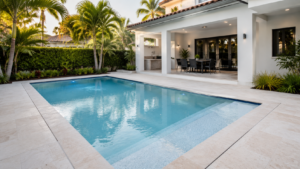
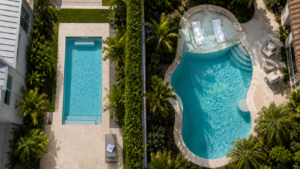
A lap pool prioritizes continuous swimming. Its long, linear layout gives a swimmer a clear route from one end to the other, without benches, steps, or irregular curves interrupting the lane. It does not need to match the dimensions of a competition pool, but length and an unobstructed path remain central to the design.
A recreational pool prioritizes variety. It may include wider shallow areas, broad entry steps, benches, open zones for floating, and space where several people can gather comfortably. When planning new pool construction in Miami, homeowners should decide whether exercise or shared leisure will be the pool’s main purpose before defining its dimensions and features.
The two categories do not have to be rigid. A custom design can preserve a straight swimming route while adding a social area outside the lane. The challenge is to combine those uses without allowing one feature to make another less practical.
How Backyard Space and Layout Affect the Choice
Lap pools require usable length more than generous width. This can make them suitable for long side yards, modern rectangular lots, or properties where the pool needs to follow the architecture of the home. However, the pool still needs room for coping, safe circulation, equipment access, and comfortable movement at both ends.
A recreational swimming pool offers more freedom in its outline. It can be rectangular, freeform, or shaped around existing outdoor areas. Wider sections support play and conversation, while curved edges can respond to landscaping or an irregular yard. The design should still preserve enough deck space for seating and clear routes between the house, pool, and other outdoor features.
Property conditions can influence both options. Setbacks, drainage, utilities, construction access, and the position of existing structures may reduce the area available for water. The view from inside the house also matters. A pool should strengthen the connection between indoor and outdoor spaces without blocking the routes people use every day.
Lap Pool vs Recreational Pool: How Each One Supports Daily Use
A lap pool works best when swimming is already part of the homeowner’s routine. It creates a dedicated environment for repeated strokes, low-impact exercise, and consistent training. A clear lane also reduces the frustration of navigating around shallow shelves or groups of people while exercising.
A recreational pool better supports households that expect several activities to happen at once. One person may relax on a bench while others float, play, or talk in a shallow area. Gradual depth changes can create distinct zones, although every section should be planned around safe movement, visibility, and the abilities of the people using it.
The number of users matters as much as the preferred activity. A dedicated swimmer may favor a lap pool, but a household that entertains frequently may need more width and seating. If one person swims regularly while the rest of the family prefers leisure, a hybrid layout may offer the most balanced solution.
Cost, Maintenance, and Long-Term Flexibility
Neither design is automatically the less expensive choice. Pool cost depends on excavation, structural design, dimensions, perimeter, finishes, equipment, decking, and site conditions. A narrow lap pool can still require substantial excavation because of its length. A recreational pool may become more expensive when it includes complex curves, multiple depths, large steps, or several built-in features.
Homeowners comparing swimming pool prices should look beyond the size of the water alone. Decking, drainage, access, material selections, and equipment capacity can change the final budget. A detailed plan makes it easier to understand which features contribute most to the project.
Maintenance depends more on water volume, circulation, surface area, nearby landscaping, and equipment than on the category assigned to the pool. A simple rectangular design may be easier to cover or navigate with cleaning equipment, but proper hydraulic planning remains essential in either case. Homeowners should also consider how their routines may change as children grow, exercise habits evolve, or entertaining becomes more important.
Choosing Between a Lap Pool vs Recreational Pool for Your Home
The best choice begins with a realistic picture of everyday use. Homeowners should consider who will enter the pool most often, what they will do there, how many people may use it together, and which activities cannot be compromised. These answers provide more direction than selecting a shape based only on appearance.
A hybrid design can sometimes satisfy both priorities. A long rectangular pool may include wide entry steps positioned away from the swimming route, a bench along one side, or a broader area at one end. These additions must support leisure without shortening or obstructing the lane that gives the lap pool its purpose.
Elite Pool Construction helps South Florida homeowners create custom pools around their properties and lifestyles. By balancing swimming, relaxation, available space, and long-term plans, the team can develop a design that feels purposeful from the first day and remains useful for years.