A swimming pool is more than a place to cool off on a hot day. It is a centerpiece of outdoor living, a gathering spot for friends and family, and often one of the most valuable features of a property. However, like any part of a home, pools age over time. Surfaces wear down, cracks appear, and the once-smooth finish starts to feel rough underfoot. That’s where pool resurfacing comes in.
This process is one of the most effective ways to restore both the look and the function of a swimming pool. By replacing the old surface with a new finish, homeowners not only improve aesthetics but also protect the pool from further damage.
In warm, high-use regions such as South Florida, resurfacing is even more important. Constant sun, heavy rains, and frequent use speed up wear and tear. Knowing when and how to resurface can save money, extend the life of the pool, and transform an aging backyard into a modern oasis.
Pool Resurfacing and Why It Matters
At its core, pool resurfacing means applying a new finish to the inside of the pool. This is more than a cosmetic change. It is a vital maintenance step that preserves the pool’s structure and ensures safe, enjoyable use for years.
Without resurfacing, minor surface problems like etching or discoloration can become serious. Small cracks expand, leading to water leaks that damage not only the pool but also the surrounding deck and soil. Rough textures can scrape skin or cause discomfort when swimming. By scheduling resurfacing on time, homeowners avoid these risks.
Equally important is the opportunity to upgrade. Modern resurfacing materials are more durable, colorful, and slip-resistant than older options. A pool resurfacing project doesn’t just fix problems—it can also bring a pool in line with today’s design and safety standards.
Signs That You Need Pool Resurfacing
Every pool owner should learn to recognize the early warning signs of surface damage. The most common is discoloration. Stains that no longer respond to regular cleaning often signal that the surface has lost its protective layer. Another key indicator is a rough or chalky texture. If walking or swimming feels uncomfortable, resurfacing may be overdue.
Cracks and leaks are more serious red flags. Even small fractures in the finish allow water to escape. Left unchecked, leaks can cause soil erosion, damage to decking, and costly structural repairs. In warm regions with heavy rainfall, these problems progress even faster. Acting quickly with a resurfacing project protects both the pool and the property.
A pool that looks outdated is also a candidate for resurfacing. Trends change, and finishes installed a decade ago may no longer match modern backyard designs. A new surface can completely transform the look of a pool, making it brighter, cleaner, and more inviting.
Best Materials for Pool Resurfacing
Homeowners today have several resurfacing materials to choose from, each with distinct benefits. Traditional plaster is the most affordable option. It offers a smooth finish and a clean look, but it may wear faster in high-use or high-heat environments. Quartz aggregate is a step up, combining durability with vibrant color options. It resists staining and maintains its appearance longer than plaster.
For those seeking both performance and luxury, pebble finishes are increasingly popular. They provide excellent durability and a natural, textured appearance that blends beautifully with outdoor landscapes. Pebble surfaces also stay cooler under the sun, an important advantage in Florida. Tile is the premium option. Though more costly, it offers unmatched aesthetics and longevity. Glass and ceramic tiles create unique, eye-catching designs that elevate the pool to a statement feature.
The right choice depends on budget, lifestyle, and design goals. A professional can help weigh the pros and cons of each material, ensuring the resurfacing investment delivers lasting results.
The Resurfacing Process Step by Step
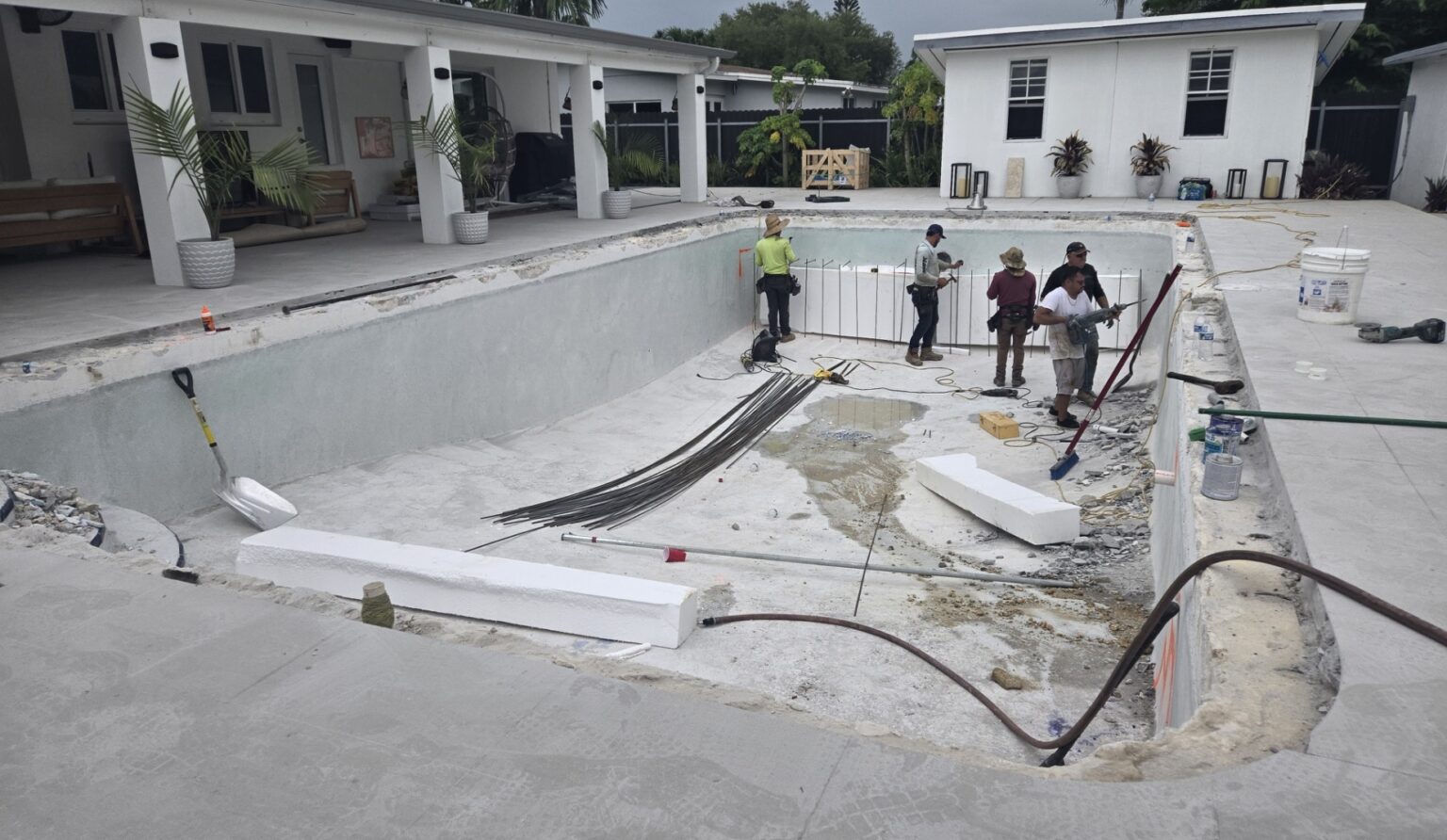
Understanding the resurfacing process helps homeowners know what to expect. It begins with draining the pool completely. Once empty, the old surface is prepared by sandblasting or hydro-blasting to remove loose material and create a strong bond for the new finish.
Next comes the repair stage. Any cracks or hollow spots are patched to ensure the new surface will hold up. Then, the chosen resurfacing material is applied. Plaster, quartz, pebble, or tile is carefully installed by trained professionals, often taking several days depending on the size of the pool.
Finally, the pool is refilled, balanced with the proper chemicals, and brushed regularly for the first few weeks. This curing process is essential for achieving a smooth, durable finish. Most resurfacing projects can be completed within one to two weeks, meaning homeowners enjoy minimal downtime before swimming again.
Benefits Beyond the Surface
Resurfacing a pool delivers benefits that go well beyond appearance. A new finish makes the pool safer by eliminating rough spots, cracks, or slippery patches. It also reduces maintenance. Modern finishes resist algae growth and staining, which means less time cleaning and more time enjoying the water.
Property value is another key advantage. Real estate professionals often note that a newly resurfaced pool increases buyer interest and can justify higher asking prices. In competitive markets like Miami, a fresh, modern pool finish can set a home apart.
Resurfacing also creates the opportunity for upgrades. Many homeowners pair it with premium pool decking or turf installation to achieve a complete backyard transformation. This holistic approach ensures all elements of the outdoor space work together, maximizing both beauty and function.
Choosing Experts for Pool Resurfacing
While some homeowners may be tempted to treat resurfacing as a do-it-yourself project, this is one area where professional expertise makes all the difference. The process requires specialized tools, technical knowledge, and precise application methods. Mistakes can shorten the lifespan of the finish or even cause structural issues.
Working with an experienced team ensures not only a flawless finish but also peace of mind. Companies with a strong track record understand the unique challenges of resurfacing pools in hot, humid climates. They know which materials hold up best and how to prevent common problems such as cracking or premature fading.
For those in Miami, Elite Pool Construction in South Florida is a trusted name in the industry. Their expertise in resurfacing, along with services like pool remodeling and new pool construction, makes them a reliable partner for any backyard upgrade.
Why Pool Resurfacing Is a Smart Investment
In the end, pool resurfacing is more than maintenance—it is an investment in the safety, beauty, and value of your home. By addressing surface damage early, homeowners avoid costly repairs and extend the life of one of their most important outdoor features.
A resurfaced pool looks modern, feels comfortable, and performs better. It enhances daily life and strengthens property appeal for years to come. Whether your pool shows signs of aging or you simply want a refreshed design, resurfacing is the solution that delivers both immediate and long-term rewards.


3 Responses